
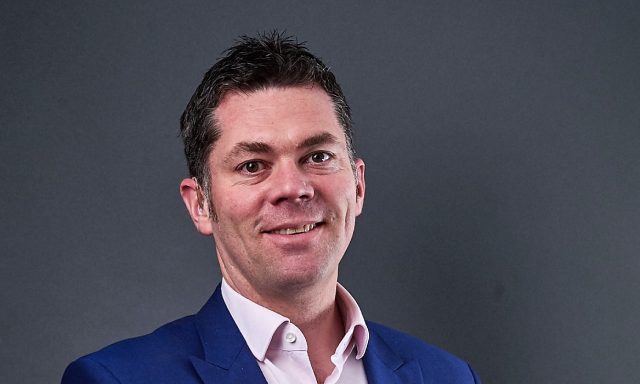
Our Chief Executive Paul Campbell reflects on the upheaval of the past few months and the steps to recovery for Richborough Estates and the industry.
It is becoming a cliché when people say that it is “business as usual” in these challenged times. An unprecedented lockdown has meant that we’ve zoomed inside colleagues and contacts’ houses, even bedrooms, that we would never normally expect to see! We’ve all had numerous, almost surreal, conversations speculating about when housebuilders might be allowed to sell or even build houses, and some of us have even had to keep our cool when a planning officer has told us that our planning applications can’t be registered because a site notice cannot safely be put up. Even those that are technophobes like me have been forced to embrace virtual meetings on Zoom, Teams and the like and found that they are rather good tools. Business as usual it is not though.
From a personal perspective, I don’t mind admitting that the impact of the virus has been stressful. There was a short period of denial that it could be happening, I mean did any of us think that it was possible to shut-down an economy in an advanced democratic society, where is the rule book to consult on that? With all the immediate economic and social upheaval that emotion soon turned to anger, a feeling that what was happening wasn’t fair somehow. But what soon followed was acceptance and a need to double down and make the most of the collective cards we had been dealt with.
I joined the industry as a young quantity surveyor straight from school just as the country was recovering from the recession of the early 90’s. Despite colleagues at the time telling me how tough it was, I was too young to truly experience that recession, after all if the salary lands in your bank account when you’re a teenager that’s generally all that matters. However, by the time of what is now called “The Great Recession” (there was nothing great about it) I was a business owner and it was an extremely tough time to survive in housebuilding.
But on reflection it was the making of Richborough, as it was the catalyst for us to specialise in strategic land when we realised there was no chance of obtaining development finance. The recession was followed with political change and an inevitable overhaul of the planning system with the abolition of regional strategies and the introduction of the NPPF in 2012, which presented us with an opportunity that we seized. The following five years were good for our sector and then came the surprise (at least for me) of the Brexit referendum in 2016 when housebuilders’ share prices almost halved when the markets opened on the morning of the result.
The following three years gave us a very febrile period of politics with a bitterly divided country and two General Elections. The market was extremely jittery over that period with a number of cliff-edge no-deal deadlines coming and going and land deals always feeling slightly precarious. With the overwhelming majority that the Conservatives secured in the 2019 General Election the stage was set for the “Boris bounce” and finally we could, momentarily at least, try and forget about Brexit and politics for a while and enjoy some sort of stability. The bounce happened and sales reservations were extremely strong in the 1Q of 2020 and many organisations stepped up their investment and growth plans, us included. What could possibly go wrong? Quite a lot as it happens!!!
So, speaking from my perspective as what now feels like a veteran of recessions and market turmoil, how do I feel about the future? Well if I’d have been asked the question four to eight weeks ago it was difficult to see through the fog, but I actually feel cautiously optimistic about the future and I set out below why I feel that way.
Covid-19 data
I don’t want to spin things too much and be ignorant to the very serious personal strife out there or be insensitive to the health threat that Covid-19 poses, but we are in possession of more hard-data than we had when the Government imposed the lockdown. If the facts change so should our opinions and we should try and look rationally at what is a quite emotive subject. Data from the NHS suggests that for those under 60 years old there have been 253 deaths where Covid played a part and where there were no known pre-existing underlying health conditions. As the Government lifts lockdown measures further and introduces more focused and sophisticated measures to protect the vulnerable, the economy will open back-up and we could and should be arguing about what type of font the “v” shape recovery looks like. It is inevitable that woeful economic data gets everyone anxious and it becomes a vicious circle, but if lockdown measures are lifted quickly and the media report on improved data then that itself creates the right animal spirits for growth.
The strength of housebuilders
The big housebuilders had net debts in aggregate of £5.8 billion in 2008 and today they have no borrowings and cash reserves of £1.5 billion. Housebuilders are exceptionally well-run businesses and since the last recession they have been very focused on return on capital employed (ROCE) and the Brexit uncertainty meant that their work in progress (WIP) has been managed in a very disciplined way. That means that their unreserved WIP, by which I mean those plots that were being built speculatively without a customer reservation or exchanged contract, was extremely low. So long as the housebuilders’ forward order book proves to be resilient then they will be cash-generative very quickly, especially as they have significantly slowed down land acquisitions and new site starts.
The role of promoters since the last recession
Land promoters have increased their share of the number of planning permissions since the last recession and they now account for over 50% of total permissions (research undertaken by Chamberlain Walker on behalf of Barratt suggests that over 80% of outline permissions were held by non-builders) and housebuilders have much shorter owned and consented landbanks than they did going into the last recession for ROCE reasons. The land promoter model is to obtain planning permission and sell the land as quickly as possible and housebuilders acquire that land as and when they need it which means they have been able to safely shorten landbanks because of the reliable and steady flow of consented land into the market. If housebuilders had carried longer landbanks over this cycle they’d have had less capital to invest in developing their sites and there would have been less houses built as a result. We work more than ever hand in glove with the housebuilders and whilst slower sale rates will lengthen housebuilders landbanks and determine their acquisition strategies, they cannot keep their foot on the ball too long or else their landbank will erode, and in any event there are always businesses in growth mode and are not just looking to replenish land. There’s also the growing role of Registered Providers in tackling the housing crisis and most do not have strategic landbanks and will buy land from promoters.
The housing crisis and the importance Government puts on its role in the recovery
The Government appears to be committed to 300k homes a year and in the last year we delivered approximately 240k when including building conversions. There is a long-term structural under-supply of housing and the need and demand is not going to simply disappear. Many people are employed in the housebuilding sector and another 0.5m would be needed to get to 300k homes. Given the enormous economic and social benefits of housebuilding I would expect the Government to invest more into the sector. Homes England are a different outfit to its predecessor and have the skill-set and infrastructure to invest and there are many more things the Government can and should do starting with the immediate extension of Help to Buy. Might we see a greater emphasis or rebranding of the “First Homes” initiative towards key-workers akin to the Homes Fit for Heroes policy after WW1? It would probably be politically astute as well as a fair reward to those that have and are keeping the NHS and the country running.
The buying public
Many people have and will lose their jobs as a result of this crisis, but an awful lot of people won’t and not everyone who works in the private sector is worrying about their job. People have spent a lot of time in their overcrowded homes and when holidays and other spending has been curtailed, the importance of the home has been elevated. 1 in 8 people do not have access to a garden and those experiencing the lockdown in more urban areas might be thinking that moving to be nearer the countryside looks more attractive than ever and a large proportion of traditional housebuilding tends to be on edge of settlement sites. The mortgage market looks right now to be very healthy with the number of products and loan to values being similar to pre-Covid levels, and there are extremely attractive long-term fixed deals which makes it cheaper than ever to buy a home. The market pre-Covid was buoyant and we go into this recession with significantly less house price inflation over the last five years than we did in 2008. This recession is very much man-made; indeed it was an intentional policy to switch the economy off, and as it is switched back on confidence will drive increased sales which in turn will see housebuilders increase their land acquisitions.
The quality of Richborough pipeline and team
We have the best team in the sector with the experience, adaptability, and drive to deliver our outstanding pipeline of sites. The number of sites that we sell to housebuilders is not necessarily driven by the capacity of the business but rather by the flow of permissions that our pipeline can deliver. So long as the planning system can keep moving – and there are promising signs as per the divisional updates from Jon Bloor and James Bradshaw – then if some of our site sales are delayed we can play catch-up when the market is functioning normally. For many other businesses, lockdown or a slowing of sales means they cannot recover that lost trade. Of course, many housebuilders and promoters have slowed down and along with a slowing of the planning system in the short term means there is likely to be less consented land coming to market in 2020 and 2021 and so the normal supply and demand dynamics could help underpin land values.
But make no mistake there are serious challenges ahead. The top five things that I think need to be done to ensure the bounce-back is strong are as follows:
1.Government should immediately announce an extension of Help to Buy by at least 12 months so that the regional cap transition doesn’t come into effect in December 2020.
2. PINS needs to take quicker and bolder action to raise their game in terms of progressing planning appeals and local plan examinations to avert a disaster in housing supply. Zack Simons from Landmarks Chambers considers this further in his thought piece.
3.Government should fast-track its forthcoming Planning White Paper and it needs to be bold. A radical and long-overdue change on the Green Belt is needed where Green Belt authorities continue to procrastinate on progressing local plans where there is an acute housing need.
4.Homes England to be given additional investment to support the industry to pick up any slack and ensure amongst other things that SMEs do not suffer like the last recession. Support should be given to land promoters too, given they provide 50% of the consents and the consequences if promoters held back investment – the LPDF is liaising with Homes England in this regard.
5.Accelerate the release of the lockdown in line with the increased knowledge and factual scientific data on the disease allowing us to return to normality as swiftly as possible.
So, as we look ahead, we don’t just see the challenges, we also see opportunities and we remain nimble footed to seize the opportunity just as we did following the last recession. If the Government is serious about pulling all the levers at their disposal to stimulate growth in housebuilding through changes to the planning system, then we are ready to accelerate the delivery of our pipeline and secure and promote new sites. Promoters can and will play an important role in the recovery.
I’m pleased to be able to announce that we have reopened our office this week on a part-time basis. I end as I started and confirm it is most definitely not business as usual but it is positive steps towards normality and the team and I are confident we can deliver on our five year plan and are very much open for new business.